
Many St. Louisans are trying to establish solid financial futures for themselves, and an important aspect of that is having good credit. Having a high credit score will not only save you money—it opens more financial opportunities, gives you flexibility, and lets you live the kind of life you want.
Whether you are establishing credit for the first time, have had to take on more debt than you can handle, or just want to bump your score up a notch, there are some easy-to-follow ways to put yourself on a positive financial path.

Why a Good Credit Score is Important
A credit score does two things: it indicates your level of financial responsibility to lenders, and it signifies your overall financial health. Having a good credit score gives you the peace of mind that you’re making the correct financial decisions. It also comes with very practical benefits.
Lower Interest Rates
Being a responsible borrower means lenders will compete for your business. They do this by offering low interest rates. When making a major purchase such as a house, even a small decrease in interest rate can save you tens of thousands over the life of the mortgage. This means that you’ll be more likely to afford the home you want in the area you desire, from St. Louis to the suburbs to rural Missouri.
Higher Loan Amounts
Lenders tend to cap the amount they lend to borrowers with fair, poor, or no credit. When it comes to buying a home, starting a business, or purchasing a vehicle, you won’t want to be hamstrung by limited borrowing power. A good credit score opens up purchasing options and ensures that you get the money you need.
Higher Credit Limits and Better Rewards
Borrowers with high credit scores frequently find themselves “pre-approved” for rewards-based credit cards. These offer perks such as cash back, travel points, and promotions with specific retailers. You’ll also have higher credit limits.
How is My Credit Score Determined?
Credit bureaus use two main formulas to determine your credit score: FICO and VantageScore. The formulas they use are very similar, though FICO is more commonly used by lenders. Here’s a breakdown of the FICO formula, and the effect each category has on your score:
- Payment History (35%): Simply put, your payment history says whether you make your payments on time. This is the most important category. In fact, about 98% of FICO High Achievers don’t have any missed payments, and the few that do have been making on-time payments for at least four years.
- Amounts Owed (30%): This is the ratio of the amount of credit being used to your available credit. If the ratio is too high, you might be living beyond your means and at risk of missing payments.
- Length of Credit History (15%): This looks at the age of your accounts, including your oldest, newest, and the average length.
- Credit Mix (10%): FICO will see if you have a variety of loan types—for example, a mix of credit cards, mortgage, and student loans.
- New Credit (10%): Opening new lines of credit helps your score. Opening many in a short period of time is a red flag.
What Do the Numbers Mean?
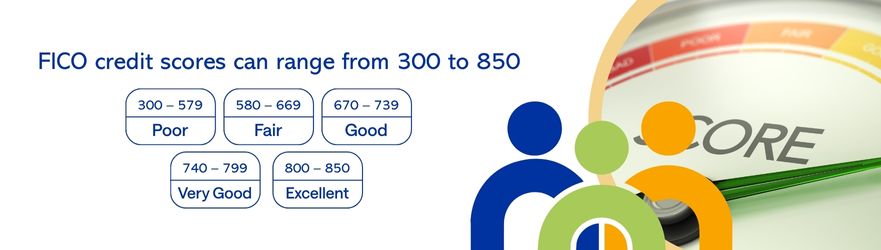
Once a credit bureau uses FICO to determine your credit score, it will fall into one of the following ranges:
- 800 – 850 Excellent: You are a low-risk and responsible borrower and will qualify for the best interest rates.
- 740 – 799 Very Good: You pay most of your bills on time and your credit balances aren’t too high.
- 670 – 739 Good: The average American lands here. It may be difficult to get some lines of credit. When you do, your interest rates will tend to be higher.
- 580 – 669 Fair: Your credit history is imperfect, and you may have a history of late payments. From here, you can still qualify for credit and rebuild your score. You just have to be strategic and accept higher interest rates for a while.
- 300 – 579 Poor: It’s difficult to obtain new credit. However, the credit professionals at Neighbors Credit Union can get you back on track.
How Can I Improve My Credit Score?
If you have a credit score below 580, or if you’re looking for a better interest rate on a mortgage, home equity loan, or other major purchase, take some steps to improve your credit score. Below are some ways to see that number go up.
Lower Your Credit Utilization
Part of the “Amount Owed” category in the FICO formula, credit utilization looks specifically at revolving credit such as credit cards and other personal lines of credit. The ratio of credit used to credit available should be under 30%. Ideally, if you’re looking for a score increase, it should be in single digits. If you have a mortgage, car loan, or student loan, don’t worry—they aren’t taken into consideration here.
To lower your credit utilization ratio, do the following:
- Request credit limit increases
- Add additional lines of credit
- Decrease your spending
- Consolidate your debt into a personal loan
It’s worth noting that each line of credit should be kept under 30%. If you are using 90% of your credit on one card and 0% on the others, it won’t have a positive impact on your credit score. Maintaining small balances across lines of credit is the way to go.
Pay Bills on Time
Staying on top of your monthly bills and debt payments establishes you as a responsible, low-risk borrower while keeping your credit utilization in check. Set up autopay for your bills and credit cards so you’ll never be late or forget a payment. Remember that payment history has the largest effect on your credit score.
Keep Old Lines of Credit Open
As you pay off your various lines of credit, make sure to keep them open. Keeping old lines of credit available maintains a higher credit limit, which lowers your overall credit utilization. Just be careful. Credit cards will frequently close automatically if you don’t use them once in a while. Use all your lines of credit occasionally and keep your eyes open for emails alerting you to lines of credit that are about to be closed.
Monitor Your Credit Scores for Errors
Subscribing to credit alerts from the credit bureaus alerts you to all changes in your credit score. Identity theft and fraud are real problems that could sabotage your credit improvement efforts. Luckily, banks and credit bureaus can help remedy your problems if you spot them quickly. The sooner you spot errors, fraudulent lines of credit, or suspicious activity, the sooner your financial institutions can help restore your good credit standing.
Neighbors Credit Union has convenient locations in St. Louis, as well as the counties of St. Charles, Jefferson, Madison, Monroe, and St. Clair. Stop by or contact us today to open a new checking account, savings account, or credit card!