

It starts small with Halloween candy and costumes. Then comes Thanksgiving, with groceries for a family meal or a trip to see relatives. Soon you’re shopping for Christmas, Hanukkah, or Kwanzaa gifts and making New Year’s Eve plans. There’s plenty to look forward to this holiday season, but all those expenses can add up quickly.
Some holiday financial planning this fall lets you make room for the celebrations you care about without carrying holiday bills into the new year.
Key Takeaways
- Review your regular bills and savings goals before setting a holiday spending limit.
- Look beyond gifts and budget for everything the season brings, like meals, travel, and decorations, as well as outfits for special events.
- Start saving as early as you can, even if the amount is modest.
- If you use a credit card, know how you’ll pay off each purchase.
- Check your spending throughout the season so you can adjust before you go over budget.
Why It Pays to Prepare for Holiday Expenses Early
Holiday spending rarely happens all at once. You might buy a costume in October, book travel in November, and pick up last-minute gifts in December. When purchases are spread out, it’s easy to lose track of the total.
Preparing for holiday expenses early gives you time to compare costs and talk about expectations with family or friends. It also lets you save over several paychecks instead of trying to cover everything in December. If you’re starting later than you’d hoped, you can still make a plan with the time and money you have now.
Review Your Finances Before Holiday Shopping Begins
Before making your shopping list, look at your take-home pay, regular bills, debt payments, and savings contributions for the months ahead. Recent transactions may reveal an expense you can trim for now, such as a subscription you rarely use.
Other seasonal costs still need room, too, like a car repair or a higher heating bill.
What’s left after your regular obligations will help you decide what you can comfortably spend. For help putting the numbers together, see our guide to building a budget that works for you.
Create a Realistic Holiday Budget
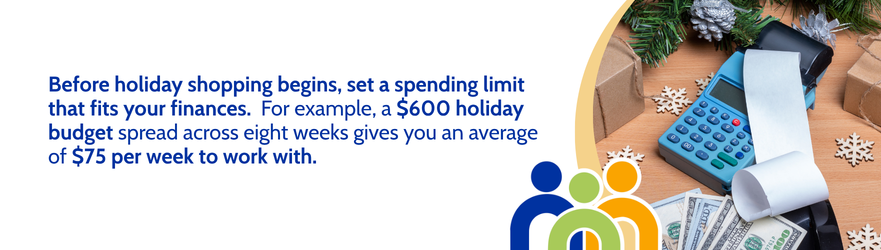
Pick one total amount you can spend across the season, then split it into categories. It’s one of the simplest holiday budgeting tips, and it makes each purchase easier to judge since you’ll always know what’s left.
Plan for Gifts, Travel, Food, and Entertainment
Write down the occasions you expect to celebrate and what each may cost. Your list could include:
- Halloween costumes, candy, and activities
- Thanksgiving groceries or travel
- Christmas, Hanukkah, or Kwanzaa gifts and celebrations
- New Year’s Eve plans
- Wrapping supplies, cards, postage, decorations, and tips
For gifts, list each recipient and choose an amount before you shop. For travel, look beyond the ticket price or that extra tank of gas. Whether you’re flying out of Lambert or loading up the car in Belleville, parking, meals, and last-minute necessities on the road add to the total.
For example, a family in St. Charles budgeting $200 for Thanksgiving dinner might realize they also need extra serving supplies or money to help a relative get home. Planning for those costs early gives them time to simplify the menu or ask guests to bring a dish.
Leave Room for Unexpected Holiday Expenses
Build a small cushion into your spending limit for a last-minute invitation or a purchase that costs more than expected. If you don’t need it, keep it in savings.
If your first estimate is more than you can manage, talk with family or friends about drawing names for gifts or setting a shared price limit. You could also choose the event you’re most excited about and skip a few others.
Start Saving for Holiday Expenses
Once you have a target, divide it by the number of paychecks before you’ll need the money. That gives you an amount to set aside each payday.
Say you want $600 for remaining holiday expenses and have six paychecks before those bills come due. Saving $100 per paycheck would get you there. If that’s too much, lower your spending target or save less.

Consider a Dedicated Holiday Savings Account
Our Holiday Savings Account keeps your holiday savings apart from everyday spending, so you can see at a glance how much you’ve set aside. Before opening an account, review the details so you know when and how you can access your funds.
Next year, consider starting in January. Saving smaller amounts throughout the year is usually easier than fitting everything into a few fall paychecks.
Automate Your Holiday Savings
You can set up automatic transfers from your checking account to savings, so money goes aside each payday without you having to remember. Starting in October, someone saving $25 every two weeks could have roughly $125 to $150 set aside by mid-December.
Choose an amount that leaves enough in your checking account for bills and everyday needs. You can track your progress with our online and mobile banking and adjust as needed.
Use Credit Cards Wisely During the Holidays
A credit card can be convenient when you’re shopping online or traveling. Make sure each purchase fits your budget, even if the payment won’t be due for several weeks.
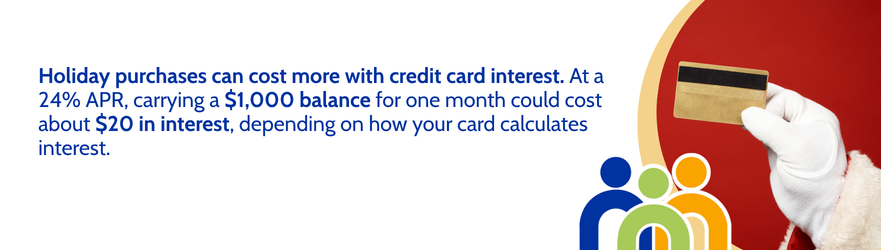
Before reaching for your card, decide how you’ll pay the balance. Paying in full by the due date can help you avoid purchase interest when your card’s grace period applies. If you expect to carry a balance, check the APR and factor interest into the cost.
A card’s credit limit may be well above what you can comfortably repay, so let your budget set your spending. If you’re comparing cards, explore our credit card options and consider how you plan to use and repay one.
Track Your Spending Throughout the Season
Keep your budget handy and update it as you shop. Small purchases count, too, whether it’s shipping fees or another bag of Halloween candy.
Check your totals once a week. If Thanksgiving costs more than expected, decide where to adjust before buying December gifts.
Compare account and card transactions against your receipts as well, since returns and delayed charges can make the numbers harder to follow.
Protect Your Financial Goals Heading into the New Year
Leave your emergency fund out of your holiday plans. If the car breaks down in December, you’ll want that money there.
Keep making required debt payments and consider how a new credit card balance could affect goals you’ve already set.
If money is tight, focus on what you’re most looking forward to. A homemade meal or an inexpensive gift can still make the season feel special.
After the holidays, review what you spent and note anything that surprised you. Use those numbers to set next year’s savings goal well before Halloween comes around again.
Start Preparing for the Holidays with Neighbors Credit Union
As your Neighbor, we’re here to help you get ready for the season of celebrations. Have questions about how to save for the holidays or manage your accounts? Explore our savings accounts, contact us online, call us at 314-892-5400, or stop by your local branch.